A recent visit to the Memory Trail at London’s Museum of Brands proved revelatory. My generation occupies a unique position in terms of product knowledge: Through our grandparents, or possibly great-grandparents, we remember products dating back to Victorian times; through our parents we are familiar with brands from the 1920s to the 1950s; our own memories recall brands from our childhood in the 1960s and ‘70s; and we have lived through a huge transformation in retailing during the 1980s and beyond.
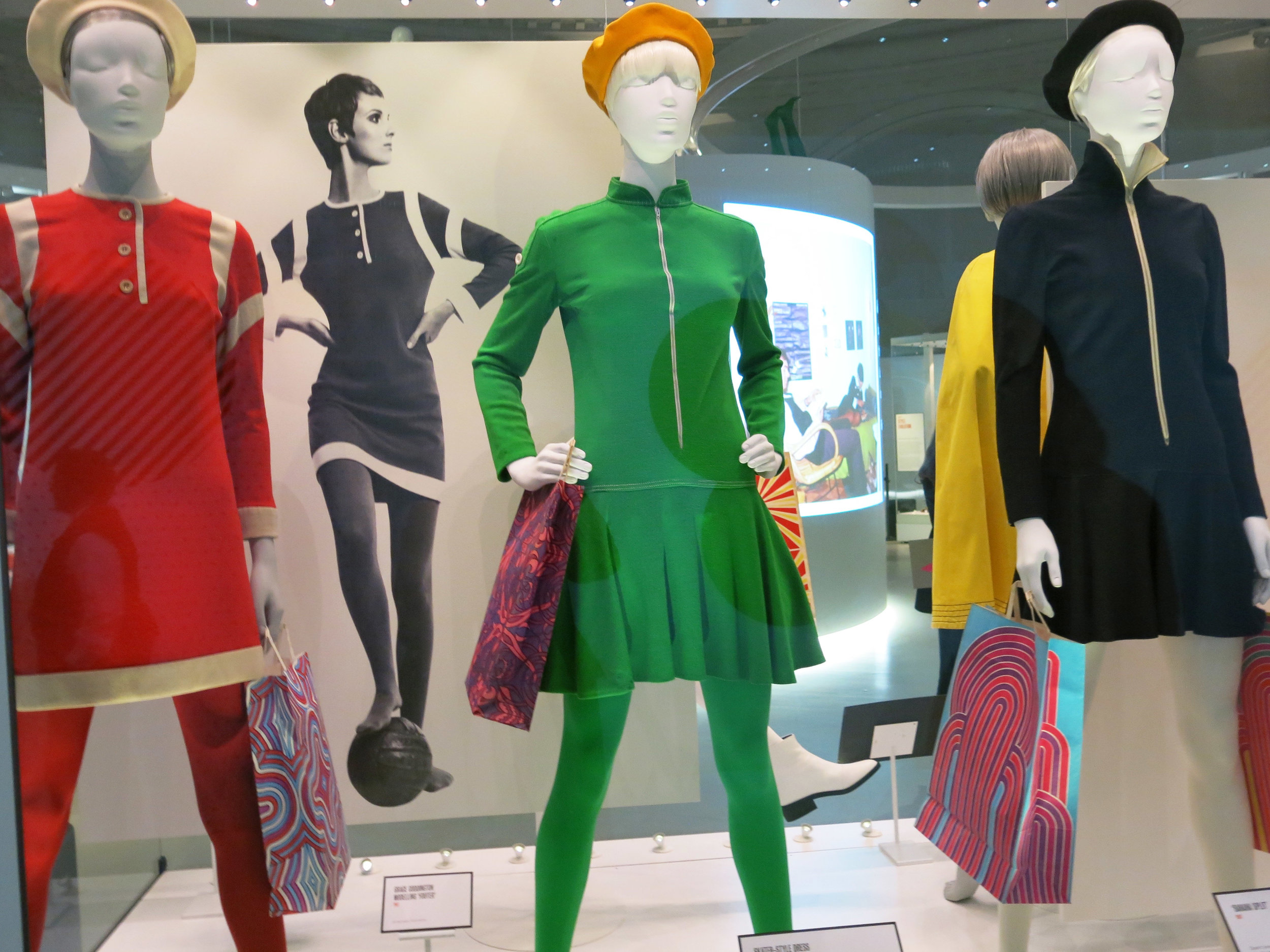
I was not quite old enough to feel the full force of the revolution in young consumer behaviour that took off from the mid-1960s. Vreeland’s term ‘Youthquake’ makes this sound a traumatic, perhaps even threatening experience. But memories of a more innocent time came flooding back to me when I visited the Dame Mary Quant retrospective at the V&A: Cut-out-dolls; older girls’ Jackie magazines with their photo-stories of boyfriends and snogging; the pains of puberty, of ‘First Love’ tights, and not being sufficiently waif-like to rock the boyish style of Quant’s micro-mesh and lycra ‘Booby Trap’ bras, though I still wanted to wear them as I’d fallen head over heels in love with the design.
Aged just 21 when she opened her first Bazaar boutique in the King’s Road in 1955, Mary Quant was young enough to capture the hearts and imagination of young girls on the verge of becoming women. The collision of girly innocence with the overt sexuality of a newly liberated age that radiated through Quant’s products and their promotion was simultaneously borne out in my generation’s experience of growing up. The dolls we played with wore seductive adult clothes, Lolita style illustrations adorned our teenage comics and young women, possibly even our mothers, were known as ‘dolly birds’, sometimes shortened to ‘dollies’. Yet I was definitely a ‘daddy’s girl’, which may explain the poignant appeal of Quant’s insightfully marketed fashion, beauty and lifestyle range: She even named one of her 1964 Ginger Group Collection dresses Daddy’s Girl.
In addition to the ubiquitous mini-skirt, Quant created baby-doll dresses, hot pants, fetish-friendly ‘Wet Collection’ PVC raincoats and freedom-of-movement capes, easy-access zipped pinafores, the ‘X-Certificate’ wet-look cat suit (modelled by reputedly transgender Amanda Lear), the ‘body-stocking’, coloured underwear and panty-girdles that were crying out to be seen – exhibits include a mannequin with legs akimbo revealing her underwear, and another in a frilly-knicker bearing pose reminiscent of Martin Elliot’s famous tennis court poster. The clothes were playful – after all, the wearers were still children, playing at dressing up – as evidenced from a moving collage of images sent into the V&A by Mary Quant wearing members of the public, including young models, society figures and ordinary girls, as part of the well-supported #WeWantQuant campaign.
The provocative names of Quant’s cosmetics range echoed the mood of a ‘permissive society,’ from ‘Come Clean Cleanser’, ‘Vamps’ false eyelashes and ‘Cheeky’ liquid blusher to ‘Starkers’ nude makeup, “like skin, but not quite bare,” and ‘Naughty Nails’ polishes, including colours such as Sultry Sapphire and Tempting Turquoise. Her mid-1960s scents were created to evoke, “an erotic feel coupled with a kind of cleanliness,” and a 1974 fragrance called Havoc (also the name of Daisy’s sister doll) was “for girls who like to play it.”
Even Quant’s advertising appealed to the frailty of young girls’ emotions, for instance Tom Wolsey’s artwork for her waterproof mascara called Cry Baby hinted that this could be utilised by women to disguise their feminine vulnerabilities. Like many girls, I used to spend hours drawing, and it was an inspired move by Quant to devise a set of make-up crayons, introducing me and many other pre-teens to their first adventure with cosmetics. Another playful touch was the childish simplicity of the daisy logo, used everywhere, even on the soles of rubber galoshes - cleverly designed to leave flower-shaped imprints in mud or snow.
Quant’s modern innovations, like simple garment shapes, and her use of jersey and synthetic textiles, overlapped with an older generation’s practice of making their own clothes, so it made commercial sense for sewing patterns and fabrics to become a major part of the Mary Quant empire. I remember our local ‘wool shop’ being a cornucopia of coloured silk embroidery thread, exotic haberdashery and ‘paper dress patterns’, which is what they were called even if you were making trousers.
In contrast to this earlier world, was the one where women had started going to work in commerce, although mainly as secretaries. They were provided for by Quant’s practical working wardrobe of prim pinafores and pinstriped dresses. There was also a range of dungarees, though these were more likely to have been worn for relaxed social occasions, along with jump suits, a remarkably early conception of the tracksuit as leisurewear, and other unisex-style clothing.
The V&A exhibition comprehensively displays many simultaneous strands at work - the girlish spontaneity of Quant’s designs, the highly gendered nature of fashion communication and media at the time, the progress of a social and sexual revolution where women gradually appropriated men’s trousers and ties, as well as the designer’s foresight, innovative use of new fabrics, and her team’s undeniable commercial prowess.
Previously seen as being fun, though possibly not a brand to be taken too seriously, only in recent years has it become evident beyond the fashion industry just how important Mary Quant has been in terms of the history of design, promotion and popular culture. Although she implies in her 1966 autobiography that she would prefer to live in a fantasy world of her own making than grow up having to face real life, this exhibition successfully demonstrates that Mary Quant has finally come of age.
Mary Quant, co-curated by Jenny Lister and Stephanie Wood, is at the V&A from 6th April 2019 – 16th February 2020.
This article was originally published with some of my photographs at The Protagonist Magazine